Loading image...


Indoor Fireplaces
Designed for maximum indoor flexibility
Complement any room with an eco-friendly ethanol indoor fireplace. EcoSmart Fire offer a premium bioethanol indoor fireplace range, with design integrity features at its core.
Indoor Ranges

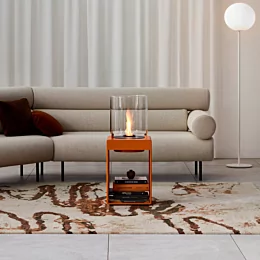




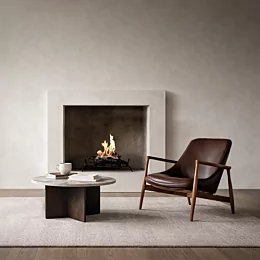



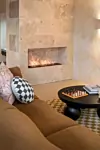
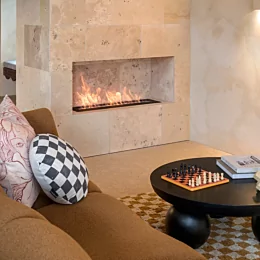

Models
Showing 18 items of 74
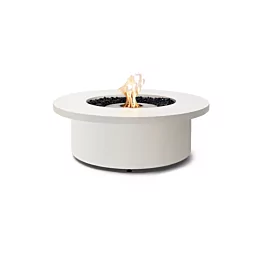
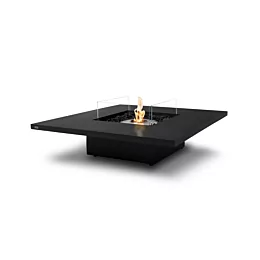
Sidecar 24 Fire Table
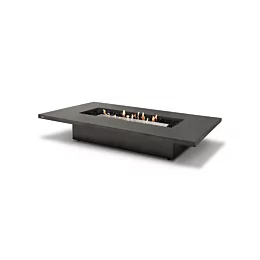
Chaser 38 Fire Table
Base 30 Fire Table
Base 40 Fire Table
Ark 40 Fire Table
Mimosa 40 Fire Table
Mojito 40 Fire Table
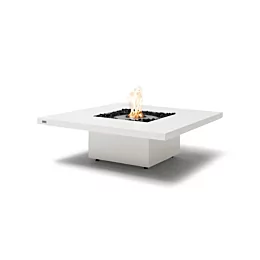
Vertigo 40L Fire Table
Vertigo 50VL Fire Table
Vertigo 50L Fire Table
Daiquiri 70L Fire Table
Manhattan 50 Fire Table
Martini 50 Fire Table
Cosmo 50 Fire Table
Wharf 65 Fire Table
Gin 90 Low Fire Table
Gin 90 Chat Fire Table
Gin 90 Dining Fire Table












-outdoor-elegance-5531-screen.png)
-outdoor-elegance-5531-screen.webp)























Loading image...
Clean-burning
Bioethanol produces no harmful emissions, just heat, steam and carbon dioxide which is re-absorbed by plants, this means no soot, no smoke, no ash and no mess.
Efficiency over 90%
No flue or chimney means that the heat generated by the fireplace during combustion isn’t lost up the chimney.
Loading image...


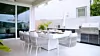
Freestanding models
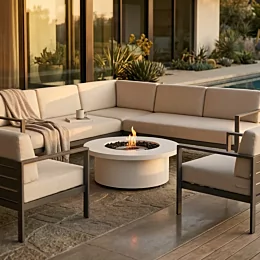
Cleverly refashioning the traditional fireplace concept into a piece of flexible fire furniture means that you can enjoy the simple pleasures of an open fire whenever and wherever you want it.
Loading image...
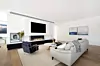

Built-in models
EcoSmart Fire has a design solution for custom-made, built-in fireplaces to fit countless design briefs, floor plans, indoor and outdoor spaces.


Loading image...
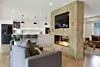

Installation flexibility
EcoSmart Fires can be incorporated at any stage of your interior decorating, renovating or building works.
Design freedom
No need for cabling, gas connecting, chimneys or flues provides creative freedom for homeowners and interior designers.
Loading image...
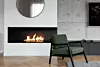

Add value to your property
The presence of a fireplace in your house increases the value of your home.
Loading image...


Thoroughly tested worldwide
Our collection has been thoroughly tested against a number of global standards and is O-TL Listed in accordance with UL 1370 in the USA, certified in accordance with EN16647 in Europe and the UK, and satisfies the ACCC Safety Mandate for Australia.
Styled by Our Clients
Loading image...

Loading image...

Loading image...

Loading image...

Loading image...

Loading image...

Loading image...

Loading image...

Loading image...

Related Collections
Learn More
Indoor Fireplaces
Indoor Fire Pits
Indoor Ethanol Fireplaces
FAQ's
What is the minimum room size for an indoor ethanol fireplace?
Indoor ethanol fireplaces produce a clean-burning flame, and the minimum room size to house one starts at around 40 m³ [1,413 ft³] for compact burners. This translates to roughly 16.7 m² [180 ft²] of floor area at a standard 2.4 m [7.9 ft] ceiling, a threshold most living rooms, bedrooms, and dining areas comfortably meet.
To make this concrete: a room measuring 5 m x 3.3 m [16.4 ft x 10.8 ft] with a 2.4 m [7.9 ft] ceiling meets that minimum. Larger burners like the BK5 require 70 m³ [2,472 ft³], suitable for more generous living areas. Even substantial installations typically work in spaces up to 60 m² or beyond.
Ceiling height is critical. A room with identical floor area but taller ceilings demands a larger burner to reach the minimum volume. For example, a 15 m² [161 ft²] space with 2.7 m [8.9 ft] ceilings reaches 40.5 m³ [1,429 ft³], just above the AB3's 40 m³ minimum. Raising the ceiling to 3 m [9.8 ft] in the same floor area increases volume to 45 m³ [1,589 ft³]. This flexibility means smaller rooms with standard ceiling heights often qualify without needing a larger burner.
Check the specifications for the exact burner you're considering, as minimums vary by model and installation type.
Do indoor fireplaces add value to your home?
Yes, indoor fireplaces add tangible value to your home. EcoSmart Fire's contemporary bioethanol fireplaces, including linear design installations, command particular appeal in premium property markets, where design-forward features distinguish a home from the competition.
Unlike traditional fireplaces, EcoSmart Fire bioethanol models function as architectural focal points. The clean-burning flame and freedom to install in any room make these fireplaces compelling to design-conscious buyers seeking contemporary aesthetics merged with practical warmth. A striking focal point becomes a reason to linger in a space; in property markets, memorable features justify premium pricing.
The range's design flexibility, from minimalist linear installations to Art Deco and contemporary directions, means the fireplace adapts to your home's aesthetic rather than imposing one. This appeals to buyers who increasingly view sustainable, ventless heating as an expectation in luxury properties. With over 90% combustion efficiency and clean-burning performance, bioethanol fireplaces signal aesthetic sophistication and environmental stewardship, strengthening buyer confidence and property appeal.
Can indoor fire pits be used year-round?
Yes, EcoSmart Fire's freestanding or built-in bioethanol fire pits perform consistently indoors year-round without seasonal limitations. Unlike traditional fireplaces that depend on external venting and seasonal installation, bioethanol systems produce only heat, steam, and CO2, with all combustion managed safely via natural ventilation in rooms meeting EN 16647 specifications.
Your fire pit delivers the same ambience and warmth whether you're using it for summer aesthetics or cooler-month supplementary heating. Burn times stay consistent at 6 to 10 hours per fill. Freestanding models can be repositioned seasonally if your interior layout shifts.
EcoSmart Fire's systems are engineered for consistent indoor performance, backed by EN 16647 certification and over 20 years of global installations.
Do indoor ethanol fireplaces produce steam or condensation?
Indoor ethanol fireplaces do produce water vapour during combustion, alongside heat and carbon dioxide. However, condensation on windows, walls, or other surfaces is uncommon under normal operating conditions, and the concern is largely overblown.
The amount of moisture released is modest and dissipates naturally when a room has adequate air circulation. Most indoor spaces have sufficient ventilation through windows, doors, and mechanical systems to prevent moisture accumulation. Think of it this way: the water vapour your fireplace produces is comparable to what a single person exhales or what a shower produces. It is a byproduct of the clean combustion process, not a source of excess humidity.
Condensation becomes relevant only in extremely enclosed spaces with poor ventilation, where multiple sources of moisture already exist (cooking, multiple occupants in a small sealed room). In such rare cases, simply opening a window or using modest air circulation solves the issue entirely. When you follow EcoSmart Fire's ventilation guidelines for your room size, which account for both oxygen consumption and moisture dispersal, condensation simply doesn't occur.
Do indoor ethanol fireplaces need a chimney?
No, EcoSmart Fire bioethanol fireplaces don't require a chimney. Their clean-burning flame produces only carbon dioxide and water vapour, with no smoke, soot, ash, or flue gases that would need venting. Because no chimney is needed, all the heat from combustion stays in your room instead of escaping up a flue, delivering over 90% thermal efficiency.
This clean combustion unlocks design freedom. You can place an ethanol fireplace on any level surface in a condo, apartment, heritage property, or mid-renovation space without structural modifications, gas lines, or chimney infrastructure. Adequate ventilation in the room is the only practical requirement, which most spaces naturally provide.
Can an indoor fire pit be used in an apartment?
Yes, an indoor bioethanol fire pit can work well in an apartment, provided you have a room large enough and permission from your building management or landlord. EcoSmart Fire designs many models specifically for indoor apartment living, with no need for structural modifications, flue installation, or gas lines.
Apartment suitability depends on room volume. A smaller bioethanol fire pit using the AB3 burner requires a minimum of 40 m³ [1,413 ft³], which fits a typical bedroom or lounge. Larger models with an AB8 burner need 116 m³ [4,096 ft³], comparable to a spacious master bedroom or open-plan living area. You'll also need at least 600 mm [23.6 in] clearance from the flame to furniture and walls, and 2,000 mm [78.7 in] of overhead clearance to ceilings.
Before purchasing, confirm with your building manager, body corporate, or landlord that bioethanol fire pits are permitted under your lease or building by-laws. Some apartments restrict open flames, even clean-burning ones, or impose insurance requirements. Many buildings approve them once they understand there's no chimney, no gas installation, and no structural work involved.
Freestanding models suit renters well, as they can be repositioned or removed without leaving permanent marks or damage. This flexibility appeals to both you and future property owners.
How much heat does an indoor fire pit produce?
A portable fire pit rated for indoor use produces between 5,800 and 20,433 BTU/h (2–6 kW), depending on the burner inside. That output is deliberate: enough to add a noticeable ring of warmth around the fire, while staying in scale with the room it sits in.
Two indoor-rated burner sizes cover most layouts:
- Compact bioethanol units built around the AB3 burner deliver roughly 5,800 BTU/h (2 kW), typically warming up to 20 m² [215 ft²], suited to studies, bedrooms and smaller lounges.
- Larger indoor fire bowls and fire pits built around the AB8 burner deliver around 20,433 BTU/h (6 kW), typically warming up to 60 m² [646 ft²], suited to most open-plan living areas.
EcoSmart Fire positions an indoor fire bowl as a contemporary fire feature that anchors the room with a real flame and a noticeable ring of warmth, complementing your existing heating system rather than replacing it. All figures are indicative and shift with room shape, insulation and airflow.
What is the difference between an ethanol fire pit and a gel fuel fire pit?
Portable fire pits fuelled by liquid bioethanol and those running on gel fuel differ in three ways: fuel composition, flame quality, and long-term cleanliness.
e-NRG bioethanol is produced at 96–97% purity from fermented corn crops and burns to only heat, water vapour, and CO₂, leaving no smoke, soot, or ash and no odour during use. Gel fuel is a thickened alcohol paste sold in sealed canisters; because it is not formulated for compatibility with a dedicated engineered burner, flame consistency and surface cleanliness can vary over time.
Two further distinctions shape the decision for indoor use:
- Burner compatibility: EcoSmart burners are engineered specifically for bioethanol at 96–97% purity, producing a consistent flame shape and burn duration. Gel canisters are not matched to a dedicated burner system in the same way.
- Indoor safety certification: EcoSmart bioethanol fire pits carry UL 1370 (USA) and EN 16647 BSI (Europe/UK) certification for indoor use, credentials gel fuel fire pits do not typically hold.
For a decorative flame that stays clean over years of use, bioethanol is the stronger choice. EcoSmart Fire bioethanol systems are engineered for exactly that: a real flame, zero-residue combustion, and indoor safety certification that supports confident long-term use.
How do indoor ethanol fireplaces compare to electric fireplaces in running costs?
EcoSmart Fire's bioethanol fireplaces produce a clean-burning flame at a higher per-hour fuel cost than electric; electric fireplaces have lower running costs, but the two technologies serve different needs.
Flame-only mode on an electric fireplace costs roughly $0.01–$0.02 per hour; full heating mode (1,500–3,000W) runs $0.10–$0.24 per hour at typical electricity rates. Ethanol fireplaces have a higher per-hour fuel cost, varying by region and burner size (from smaller AB3 to larger AB8 options). Both operate at high efficiency: EcoSmart Fire bioethanol fireplaces convert over 90% of fuel to usable heat, retained in the room rather than lost through a flue.
The practical difference is in what you get for the spend. Electric fireplaces provide supplementary warmth in smaller spaces with precise control and low operational cost. Ethanol fireplaces deliver a genuine real flame, the sensory and visual quality of which cannot be replicated, along with placement flexibility that requires no gas line, chimney, or structural modification.
Consider total cost of ownership: with no HVAC modifications, specialist installation, or infrastructure investment required, ethanol ownership costs are more straightforward than a per-hour fuel comparison suggests. Installation savings and the enduring appeal of real flame make the fuel premium easy to justify for those prioritising atmosphere and design freedom.
Can you get real flames indoors without smoke or a chimney?
Yes, bioethanol fireplaces produce real flames indoors without smoke, ash, or the need for a chimney or flue. When bioethanol burns, it creates only heat, water vapour, and a small amount of carbon dioxide, with no soot, no residue, no complex ventilation infrastructure.
Without a flue, the design possibilities open up dramatically. Architects and homeowners can place bioethanol fireplaces anywhere: as linear installations across walls, statement surrounds in island kitchens, double-sided dividers between rooms, or zero-clearance inserts recessed into cabinetry. The flame becomes a sculptural focal point rather than a structural constraint.
EcoSmart Fire's bioethanol fireplaces sustain a real, orange flame while maintaining indoor air quality. The burner families (AB, XL) deliver consistent flame performance. Because there's no chimney requirement, installation is straightforward, with no structural engineering, no coordination with flue contractors, only design freedom.