Loading image...

 © Comma Projects and Alyne Media
 Orbit Designer Fireplace
A fireplace with no gas bill, no electricity meter and no chimney sweep sounds like an accounting trick. It isn't. A bioethanol fireplace strips the operating budget back to a single line item: the fuel you pour into the burner. That simplicity is genuinely rare in home heating, and it changes how you plan. Instead of standing charges that arrive whether the fire is lit or not, you pay only for the hours of flame you actually enjoy. The question that matters, then, is not whether bioethanol fireplace running costs are manageable. It's how to predict them for your burner, your flame setting and your evenings, so the fuel budget never surprises you.
Loading image...
© Comma Projects and Alyne Media Orbit Designer Fireplace
The running cost of a bioethanol fireplace is, in practical terms, the cost of the fuel it burns. There's no utility connection, no standing charge, no flue servicing contract and almost no maintenance beyond an occasional wipe-down, so fuel consumption is effectively the entire operating budget.
That clean scope line matters because a lot of the cost content you'll find online conflates three different numbers: the purchase price of the fireplace, the installation cost, and the ongoing cost of running it. The first two are one-off decisions. This article deals only with the third, the figure that recurs season after season.
Four variables shape that figure:
Fuel consumption and burn rate, set by the burner's size and your flame setting
Fuel quality, which affects how efficiently and predictably each litre burns
Usage pattern, the number of sessions you run and how long each one lasts
Placement, because indoor and outdoor conditions change how quickly fuel is used
Cleaning products and the occasional accessory barely register against the fuel bill, so they don't earn a line in the budget. One structural point worth noting before the numbers: EcoSmart Fire burners are designed for decorative use, which means realistic running cost calculations are built around evening sessions of a few hours, not continuous all-day operation.
Loading image...

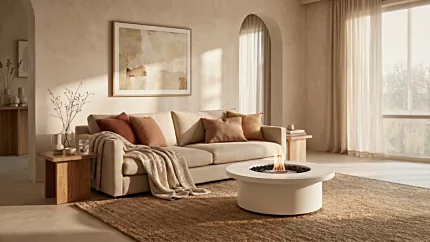
Mimosa 40 Fire Table
Once you know what moves the consumption needle, the budget becomes something you control rather than something that happens to you.
Variable | Effect on consumption | What you control |
|---|---|---|
Burner size | Larger burners use more fuel per hour | Choose a burner matched to your space |
Flame height setting | Higher flame burns fuel faster | Adjust the flame to suit the occasion |
Session length | Longer burns use proportionally more fuel | Plan sessions and fill accordingly |
Indoor vs outdoor | Wind and open air increase consumption | Shelter outdoor settings, minimise indoor draughts |
Fuel quality | Pure, formulated fuel burns more predictably | Choose a purpose-made bioethanol |
Burner capacity sets the baseline. Across the standard EcoSmart Fire ethanol burner range, fuel consumption runs between 0.31 and 0.87 litres per hour depending on burner model and flame setting; the AB8, the most powerful model at 6 kW (20,433 BTU/hr), extends that to 1.1 litres per hour at full flame. At the compact end, the AB3 burner uses around 0.31 litres per hour at maximum flame and runs for 8 to 11 hours on a 2.5 litre fill. At the larger end of the standard line-up, the XL1200 burner holds 10 litres and runs between 9 and 14 hours. All EcoSmart Fire ethanol burners (except the indoor-only VB2) carry EN 16647 certification in Europe and the UK and UL 1370-16 certification in the USA, so the consumption figures you're reading are tested under recognised standards, not estimated.
The flame setting is your cost dial. The spread inside each burner's burn-time range tells the story: the XL700 burner, for instance, runs 9 hours at maximum flame and stretches to 12 hours at its lowest setting on the same 7 litre fill. Turn the flame down and every litre simply lasts longer. The BK5 burner makes the relationship explicit; its flame control exists precisely so you can regulate heat output and, with it, the amount of fuel consumed.
These burners are the engines inside the full collection of bioethanol fireplaces, so the consumption rate of any given model traces straight back to the burner it houses.
Outdoor placement increases consumption. Wind intensifies the flame and destabilises the burn pattern, so an outdoor session at the same flame setting will get through fuel faster than an indoor one. Indoor installations in still, enclosed spaces burn more steadily and more efficiently. If your fireplace lives on a terrace, expect the lower end of the burn-time range; if it sits in a sheltered living room, expect the upper end. There's a design detail at play here too: the 40 mm air gap specified between the burner platform and a glass fire screen exists partly to assist fuel efficiency and flame quality, a small reminder that the installation itself influences the running cost.
Fuel quality is a cost variable, not just a flame-quality one. EcoSmart Fire recommends e-NRG bioethanol, its purpose-formulated fuel engineered specifically for the burner range to deliver a consistent bright flame from first minute to last, without smoke, soot or ash; it's available in Australia, the US, Canada, and the UK. Lower-purity fuels tend to produce dimmer, less consistent flames, which means you pay for litres that deliver less of the ambience you bought the fireplace for. Cost per litre is the wrong metric on its own; cost per hour of the flame you actually want is the one that matters. There's a practical wrinkle worth knowing: if a burner has been run on another fuel, it needs a full clean before switching back, so chopping and changing between fuels carries its own small cost in time.
To work out your cost per hour, find your burner's consumption rate at your typical flame setting, note what you pay per litre of fuel, and multiply the two. The method works in any currency and any market.
Find your burner's consumption rate. Every EcoSmart Fire burner publishes its maximum-flame consumption in litres per hour. If you usually run a lower flame, your real rate sits below that published figure; the burn-time range on the specification sheet shows you how far.
Note your fuel cost per litre or per bottle. Fuel pricing varies by region and by purchase volume, so use the price you actually pay.
Multiply. Consumption rate in litres per hour, times fuel cost per litre, equals your cost per hour of flame.
Worked through with real specifications: the XL500 burner consumes 0.5 litres per hour at maximum flame, so at full flame each hour costs you half a litre of fuel; at its lowest setting the same burner stretches a 5 litre fill across 13 hours, bringing consumption down to roughly 0.38 litres per hour. Your cost per hour is a range, not a point, and the flame setting decides where in that range you sit.
For a quick reality check, the EcoSmart Fire website FAQ gives a directional running cost ballpark; treat it as orientation while your actual number depends on your burner, your fuel price and your flame habit. That per-hour figure is the input. What follows converts it into an annual commitment you can plan around.
Annual fuel volume is the figure that turns an abstract per-hour rate into a real budget. The three profiles below are modelled on the consumption data above, using a mid-range burner such as the XL700 at an average flame setting, with the smaller and larger ends of the range shifting the figures down or up.
Scenario | Typical usage pattern | Approx. annual fuel volume | Budget tier |
|---|---|---|---|
Occasional ambience | Entertaining and special evenings, around 5 sessions a year | 8 to 10 litres (4 to 5 litres with a compact burner) | Entry-level |
Regular seasonal use | Three evenings a week through 20 cooler weeks | 90 to 125 litres | Moderate |
Frequent use / heating supplement | Five evenings a week across a 30-week season | 220 to 315 litres | Premium-tier |
If the fire comes out for dinner parties and a handful of special evenings, your annual commitment is genuinely small: around five sessions of three hours each adds up to roughly 15 hours of flame a year. With a mid-range burner at an average flame that's about 8 to 10 litres of fuel annually, and a compact burner like the AB3 brings it down to 4 or 5 litres. At this usage level the fuel budget barely registers as a household expense, which is part of why occasional owners so often find their usage growing season by season.
Most owners concentrate their burning in a defined season. Three evenings a week, three hours a session, across 20 cooler weeks works out to about 180 hours of flame a year, which translates to roughly 90 to 125 litres annually depending on burner size and how high you like the flame. This is the profile worth budgeting around if you're buying the fireplace as a genuine fixture of your winter evenings rather than a party piece. Buying fuel by the carton rather than the single bottle makes obvious sense at this volume.
Near-daily use across an extended season, say five evenings a week for 30 weeks, lands around 450 hours of flame and 220 to 315 litres of fuel for a mid-to-large burner. This is the premium-tier operating commitment, and it's where the lifecycle view earns its keep. Across one year or three, there's still no flue servicing, no utility connection fee, no maintenance contract and no annual safety inspection to add to the fuel bill. The total cost of ownership remains, essentially, the fuel bill. Few fire technologies can make that claim, and it's the reason frequent users often find the budget easier to live with than the headline fuel volume suggests.
The honest comparison is about cost structure, not just price per hour. Bioethanol is pay-per-use with zero standing charges. Gas and electric fires draw on metered utilities that carry connection fees, standing charges and, in the case of gas, servicing and flue obligations whether you light the fire or not. Wood looks cheap per log until you account for delivery, dry storage, handling, ash removal and chimney servicing.
Fuel type | Cost structure | Ongoing obligations |
|---|---|---|
Bioethanol | Pay-per-use, no standing charges | Refuel when empty, minimal maintenance |
Gas | Standing charge plus usage | Connection, servicing, flue maintenance |
Electric | Standing charge plus usage | Electrical connection, circuit considerations |
Wood | Variable fuel cost | Storage, handling, chimney servicing, ash removal |
Consider what surrounds the per-hour figure before comparing it. A gas fire's meter keeps a standing charge ticking through summer; its flue needs servicing; its installation needed a licensed connection in the first place. An electric fire inherits the household electricity rate, which UK regulator Ofgem's price cap data shows sitting several times higher per kilowatt-hour than gas. Bioethanol's appeal is that the meter simply doesn't exist: when the fire is off, the cost is zero, and when it's on, the cost is linear and visible in the bottle. Per hour of burn, bioethanol fuel can cost more than mains gas. Consumer research from CHOICE Australia found that a litre of bioethanol delivers roughly 90 minutes to two hours of burning on a high setting, at a meaningfully higher cost than the equivalent gas heat. But the standing charges, the servicing contract and the flue maintenance do not exist.
For occasional and regular seasonal users especially, that structure often reads better across a full year than the per-hour comparison implies. For someone heating a home eight hours a day all winter, a dedicated heating system remains the more economical tool; a decorative-grade bioethanol fire was never designed for that job, and an honest budget treats it as ambience with a useful heat dividend rather than primary heating. For the fire that sets the room, marks the evening, and never sends you a bill for the nights you didn't light it, that is the job this technology was built for.
Small operating habits compound across a season. These seven are grounded in how the burners actually behave.
Run a lower flame for everyday ambience. Reserve full flame for occasions. The burn-time ranges show the payoff: the same fill can last roughly a third longer at the low setting, with the visual character of the flame intact.
Plan burn sessions rather than topping up mid-evening. A burner must be off and cold for 60 minutes before refuelling, so a mid-session top-up means a long pause anyway. Fill to the level your evening needs and let the session run its course.
Extinguish properly. Closing the burner with its lid or damper keeps unburnt fuel in the reservoir for the next session.
Minimise draughts around indoor installations. Moving air destabilises the flame and pushes consumption up. A still room burns more efficiently than a breezy one, and a sheltered corner outdoors beats an exposed one.
Choose the right burner size for your space. An oversized burner held permanently at half effect wastes capacity you paid for. The range spans compact 5,800 BTU/hr (2 kW) burners through to 20,433 BTU/hr (6 kW), so matching output to room volume means the flame runs where it's designed to run.
Buy fuel in larger cartons where bulk pricing applies. Per-litre cost falls with volume.
Store fuel sealed and at a stable temperature. Properly stored fuel keeps its purity and burns the way it was formulated to, which protects the consistency of your cost per hour.
One more habit worth building: use the MAX fill marks inside the burner. Filling to the mark gives you a known fuel volume every session, which makes your consumption tracking, and therefore your budget, far more precise than guesswork.
Loading image...

BK5 Ethanol Burner
For a venue operator, the running cost question changes shape. Sessions stretch from a few hours to a full service period, the fire might run six or seven days a week, and there may be several installations across a property. The arithmetic stays the same, only scaled: extended operating hours increase fuel volume predictably and linearly, which is precisely what makes the budget easy to forecast. A fire feature that costs the same per hour in July as it does in opening week is a rarity in operational budgeting.
Three operational realities work in the venue's favour. Refuelling is a simple staff procedure rather than a specialist task, so there's no contractor on the payroll for routine operation. Bulk fuel purchasing is the lever for unit-cost reduction, and at commercial volumes it's a significant one. And the absence of gas connections, flue servicing contracts and utility standing charges across multiple installations strips out exactly the recurring fixed costs that make conventional fire features expensive to keep on the books. LODGING Magazine has described fire features as an expected amenity in mid- to upper-scale hotels, valued for the ambience and warmth they bring to public spaces. A survey reported by Hotel Designs found that 79% of architects and designers cited concerns about using fire in projects, with cost among the primary worries, precisely the objections bioethanol's no-flue, no-standing-charge structure resolves.
That predictability is the right frame for specifying commercial bioethanol fireplaces: revenue-supporting assets whose operating cost scales transparently with the hours they're working for you.
Running a bioethanol fireplace is one of the most transparent operating budgets in home fire: a single input, no hidden standing costs, and a consumption dial you hold in your own hand. The variables that matter are knowable in advance. Your burner's published consumption rate sets the baseline, your flame habit decides where in the burn-time range you live, and your usage scenario, whether that's ten litres of special occasions or three hundred litres of near-daily warmth, converts the per-hour figure into an annual number you can plan around.
The candid comparison holds up too. Bioethanol won't beat mains gas on raw cost per hour, but it never charges you for the hours you don't burn, and it never sends a servicing invoice. For a fire chosen for its presence rather than as a household's primary heat source, that cost certainty is the quiet advantage. Know your burner, know your season, buy quality fuel in sensible volumes, and the budget stays as clear in year three as it was on day one.
Roughly one to three hours, depending on the burner and the flame setting. Consumption across the standard EcoSmart Fire burner range runs between 0.31 and 0.87 litres per hour at typical settings, so a litre lasts longest in a compact burner on a low flame and shortest in a large burner at full flame.
Per hour of flame, bioethanol fuel can cost more than mains gas. The total ownership picture differs, though: there are no standing charges, no servicing contracts, no connection fees and no flue maintenance, so when the fire is off the cost is zero. For occasional and seasonal users, the annual budget often compares favourably with metered alternatives.
Yes, directly. The flame setting is your cost dial. The XL700 burner, for example, runs 9 hours at maximum flame and up to 12 hours at its lowest setting on the same fill, so a lower flame extends every litre while a higher flame concentrates the ambience and uses fuel faster.
Not reliably. Lower-purity fuels tend to produce dimmer, less consistent flames, so the cost per hour of the ambience you actually want can end up higher despite the lower bottle price. Purpose-formulated fuel burns predictably from start to finish, which keeps your cost per hour consistent and your burner clean.
Regular seasonal use, around three evenings a week over a 20-week cooler season, consumes roughly 90 to 125 litres a year depending on burner size and flame setting. A compact burner run at lower settings sits under that range; a large burner run high sits above it.